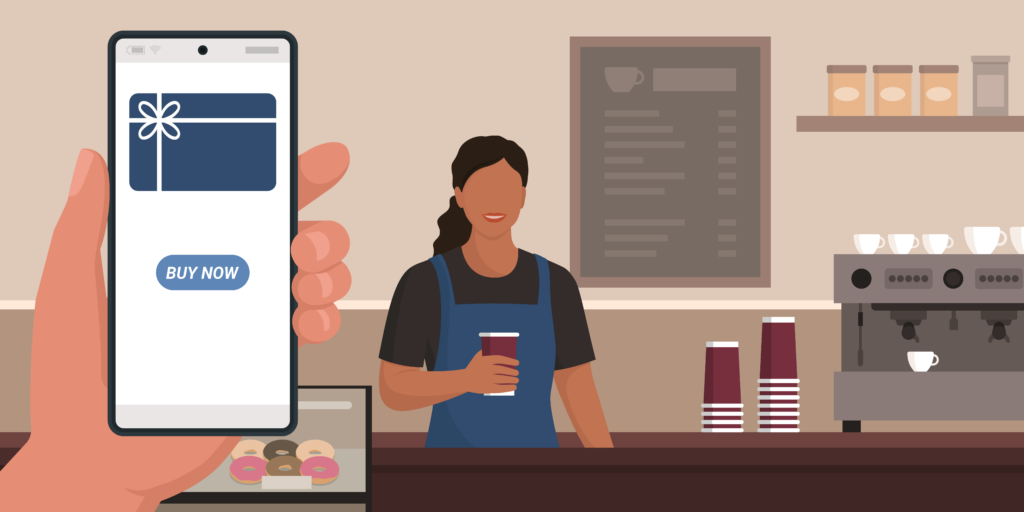
A regular buys a gift card for a coworker’s birthday. It sits in an inbox for three weeks because the email looked like a receipt, not a gift and nothing in it explained what to do next. By the time the coworker remembers it exists, the birthday has passed, the impulse is gone and the card either goes unused or gets redeemed with none of the warmth that made the purchase happen in the first place. Americans are sitting on roughly $23 billion in unredeemed gift card value, according to a Bankrate survey that found 47% of U.S. adults are holding onto at least one unspent card. That number is the clearest sign that most restaurants are still treating gift cards as a payment method instead of what they actually are: a revenue channel that operates before a single customer walks through the door. That gap, between the moment someone buys a gift card and the moment the recipient actually feels invited in, is where most restaurants quietly lose the value of the transaction. Most operators think of gift cards as a side effect of the holidays. A rack by the register in December, a small bump in cash flow, a line item that nobody pays much attention to the rest of the year. This is the kind of framing that is costing them.
The restaurants getting real value from gift cards treat them differently. It is not supposed to be a seasonal accessory but a revenue channel that operates before a single customer walks through the door. Money changes hands, a future visit is guaranteed and a second person, someone who may never have heard of the restaurant, is now holding a reason to come in. All of that happens before the kitchen has cooked a single order against it.
The offer isn’t the gift card but the moment is everything around it.

For example: a guest buys a $50 e-gift for a friend’s birthday. The restaurant gets $50 in revenue immediately, weeks or months before the card is redeemed. The recipient, who may be a first-time visitor, shows up with a built-in incentive to try the place and, more often than not, spends above the card’s value once they’re seated. One transaction, initiated by someone who wasn’t even planning to eat there, produces cash today and perhaps a new customer relationship tomorrow. That is the entire strategy. The gift card is not a discount mechanism but a prepayment mechanism with a built-in acquisition channel attached and most restaurants are leaving both halves of that value on the table because the way they sell gift cards hasn’t kept pace with how customers actually want to buy them.
Here is something that doesn’t get discussed enough. A large share of restaurant gift card programs still run through generic, off-the-shelf systems, a static page, a plain checkout, a card that shows up as a code in an email with no branding and no connection to the restaurant’s loyalty program. The purchase itself works fine but everything after it does not. The buyer gets no confirmation that feels tied to the brand. The recipient gets an email that looks like it came from a payments processor, not from the restaurant that made them think of a friend in the first place. And critically, the recipient is never invited into anything. They redeem the card and the relationship ends exactly where it started: as a one-time transaction with no path into the loyalty program, no reason to come back, no data captured about who they are.
This is not a rare edge case. It is the standard outcome of gift card infrastructure that was built to process a payment, not to build a customer relationship. The revenue lands. The acquisition opportunity, the actual reason gift cards are valuable beyond the initial sale, quietly disappears.
What precise gifting actually looks like in practice
Consider a multi-location café brand selling e-gifts online. A generic checkout collects payment and sends a receipt. A properly built gifting flow does more: it captures the sender’s identity, presents gift options that mirror what the brand actually sells and hands the recipient a branded moment that feels like the start of something rather than the end of a transaction. A restaurant group with location-specific menus needs gift types mapped to real items in its system, not an abstract dollar amount. And every recipient needs a clear next step because a gift card with no onboarding path is a missed acquisition.
What we built and why it matters
Como has introduced an advanced, multi-merchant template engine for E-Gift purchases and the first live instance is powering Caffè Concerto’s UK voucher distribution.
The system runs entirely on Stripe. Merchants link their own Stripe account directly to the Customer Portal, with the underlying account configuration handled by Como’s team at this stage and purchases move through a Stripe Tab Checkout flow: clicking purchase opens Stripe Checkout in a secondary browser tab, keeping the payment loop smooth without pulling the buyer out of the gifting experience.
Everything else is managed from the Hub, with zero additional code required for future merchant rollouts. Activation happens through a single E-Gift toggle in the Customer Portal section. Gift item design and imagery are fully configurable, with individual product images uploadable per item and an automatic fallback to a general gift card template when a product-specific asset hasn’t been set. Featured items and gift types are aligned directly with what exists on the merchant’s Stripe account, supporting both flat Credit Amounts and specific Named Items, and a “Featured Item” toggle pins the highest-priority option to the top of the catalog page.
Once payment succeeds, the experience doesn’t just end at a confirmation screen. The right-hand column transitions into a dedicated success state, a confirmation checkmark, a “Gift Sent!” banner, and recipient tracking parameters, so the sender knows exactly what happened and the system knows exactly who to notify. That recipient then receives a branded transactional email naming the sender and describing the gift’s value or item, with a direct “Claim My Gift” call-to-action that carries them straight into onboarding or login for the rewards program.
That last step is the one that generic gift card systems, built for payment processing rather than customer acquisition, tend to leave out. It’s also the one that actually matters. The purchase was never the real prize. The new customer relationship on the other end of it was.
Revenue before the door
The restaurants that get the most out of gift cards are the ones that stop treating them as a payment method and start treating them as an acquisition channel that happens to also generate upfront cash. A gift card sold today is revenue collected before a table has even been set. A gift card claimed by a first-time recipient is a customer relationship that started before they ever walked in. Every part of that experience, from the design of the card to the email that lands in the recipient’s inbox, either reinforces that this is a real relationship with a real brand or quietly undermines it by feeling generic and disconnected. There is no neutral middle ground. A gifting flow either brings someone into the program or it lets them redeem a code and disappear.
Getting this right requires infrastructure that treats the recipient as seriously as the sender. That’s what Como’s new E-Gift system is built to do: not just to process a purchase, but to make sure the moment on the other end of it, the moment a stranger becomes a guest, doesn’t get lost along the way.