A gamification loyalty program restaurants can actually use starts with one question: what does your loyalty program ask members to do between visits?
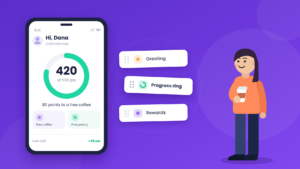
Nothing, mostly. They earn points when they spend and then they wait. Your campaigns tell them how many points they have, how many they need and occasionally that a reward is expiring. Every message is a variation on the same instruction: come back and spend more, then you’ll get something, isn’t it?
That works on the members already planning to visit. It does very little for the ones who aren’t thinking about you on a Wednesday, which is most of them on most weeks.
A game changes what you’re asking for. Instead of requesting another purchase, you’re requesting thirty seconds of attention. That’s a much smaller ask and it buys you something points can’t: a reason for someone to open your app on a day they have no intention of eating with you. Attention between visits is what turns a dormant member into a returning one and it’s the part of the funnel most F&B loyalty programs leave completely empty.
Gamification loyalty program restaurants can use: why play beats a discount
You could just send a discount, this is simpler and it works, up to a point. But a reward that someone wins behaves differently from one you hand over, in three ways that matter commercially.
- It feels earned. A member who plays a game and hits the target score experiences the reward as an outcome and not a handout. That changes how the reward is valued and how likely it is to get used, which matters because an unredeemed reward is a liability that never converts into a visit.
- It creates a story. Nobody tells a friend they got 15% off. People do tell friends they won something. That’s free reach and it’s the kind your paid channels can’t buy.
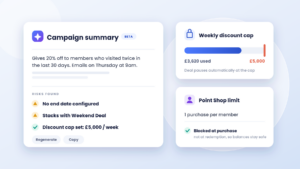
- It also protects your margin as a blanket discount applies to everyone who opens the email, including the people who were coming in anyway. A game with a capped prize pool and a one-win-per-member rule gives you a fixed, known cost that doesn’t scale with participation. You can run a campaign to 50,000 members and know exactly what the downside is. That is the main commercial argument for any gamification loyalty program restaurants run: the cost has a ceiling you set.
Two campaigns worth studying
McDonald’s Monopoly is the most instructive example in the category and it’s running right now. The 2026 US edition launched on October 6 and runs through November 1, and this year McDonald’s moved gameplay into the app. To play, you download the app, opt into rewards and register for the promotion. Game pieces come on participating menu items and get scanned through the app to reveal instant wins, properties or Chance Card plays. The company says roughly 640 million game pieces are being distributed.
The takeaway is the trigger. Every game piece is attached to a purchase, so the game doesn’t sit beside the business, it runs through it. Playing requires buying and buying earns another play. McDonald’s also used the game to force app adoption, since this year there’s no way to play without being in the app and enrolled in rewards. Your game should be wired to a behaviour you actually want more of and not floating next to the program as entertainment.
Starbucks for Life shows the other half of the equation. The most recent edition, the holiday “Merrython,” ran from December 8, 2025 to January 4, 2026 for Starbucks Rewards members, with four rotating virtual cities, a free weekly prize play and additional plays earned by visiting a store or completing weekly challenges. The mechanic that does the work there is the clock. The game exists for roughly four weeks, plays expire and each week opens something new. Urgency is manufactured entirely by the window. A permanent game is a feature nobody rushes to use. A game that ends on a date is a reason to open the app today.
Both campaigns required significant production and the underlying principles do not.
Our new games feature!
Como has released Games, currently in beta and available once the feature flag is turned on for your Hub. Once it’s on, you’ll find it under Campaign Center > Games.
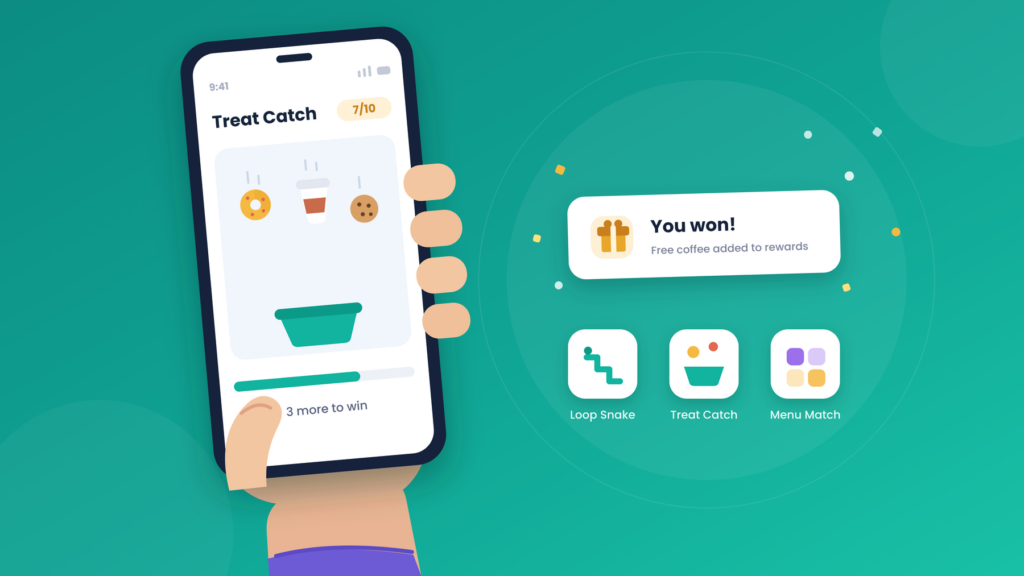
You get three ready-made mini-games: Loop Snake, Treat Catch and Menu Match. You set the game name, the score required to win, your brand colours (there’s a “Use My Colors” option that pulls your Customer Portal theme), the emojis, the gift awarded and the total number of gifts available across the whole campaign. That last number is your cost ceiling so set it to 200 and no more than 200 members can win, regardless of how many play. You can preview the game on desktop or scan a QR code to test it on your phone before anything goes live.
Eligibility runs through Campaign Center rules rather than inside the game itself. Turning a game on generates a unique eligibility tag. You build a rule that defines your audience and triggers, add a Tag Member action with that tag and activate it. That separation is what makes any gamification loyalty program restaurants run easy to extend as you can attach a game to any trigger you already use: a birthday, a spend threshold, a new registration, a lapsed member window, a slow trading day.
Distribution is a URL you copy and send through SMS, email or push, or you can let eligible members find the game in the Customer Portal navigation. If a member qualifies for more than one active game, they land on an Arena screen and pick.
When someone wins, the gift lands in their rewards automatically and the system removes their eligibility tag, so nobody wins twice on the same campaign. They can keep playing for fun, which costs you nothing and keeps the app open. Stats on total plays, unique players and gifts awarded sit on each game card in the Hub.
If this feels like a lot for a first attempt, Spin the Wheel is the simpler entry point. One mechanic, instant result, no score threshold. Start there, learn what your members respond to, then move into the skill-based games once you know.
Five rules for a game that drives visits
Before you build one, check it against these:
- Tie the play to a trigger you want repeated. A purchase, a visit, a return after an absence. A game that anyone can play at any time generates plays, not revenue.
- Cap the prize pool before you launch. Decide the maximum cost, set Total Gifts Available to match, and stop guessing.
- Give it an end date. Four to six weeks. Urgency comes from the window, not the prize.
- Make the reward redeemable in-store. The game is the hook and the visit is the point. A reward that can only be used online breaks the chain.
- Check unique players, not total plays. Plays tell you the game is fun and the unique players tell you how much of your base you actually reached which is the number that predicts whether this moved visit frequency or just entertained the same hundred people.
Q4 is the obvious window for any gamification loyalty program restaurants launch this year. Your members are already being asked to play games by every other brand competing for the same thirty seconds. The question is whether yours is one of them.