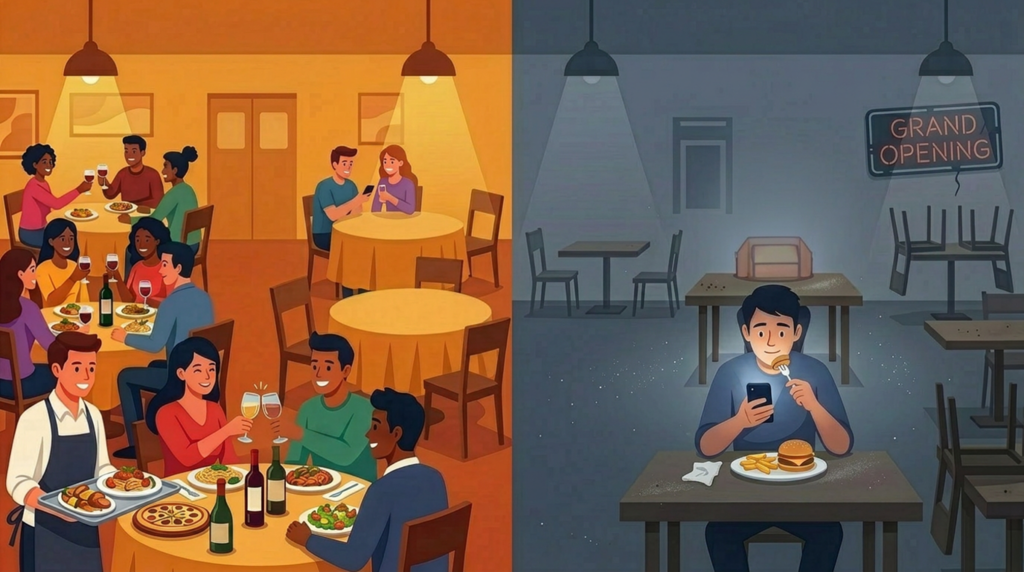
Most restaurants measure success through visible signals: full tables, steady footfall, strong delivery numbers and repeat orders that appear in dashboards at the end of the week. On the surface, these indicators suggest stability. A busy restaurant feels like a successful one. However busyness and memorability are not the same thing and this distinction becomes clear only when you ask a more uncomfortable question.
If your restaurant disappeared tomorrow, how long would it take your customers to notice?
Not how long it would take for sales to drop internally or for your team to realize something is wrong, but how long it would take for customers themselves to recognize that something they once visited is no longer there. For many brands, the answer is not immediate. In some cases, it may not be days, but weeks. And in more cases than most operators would like to admit, it might only be noticed by a small fraction of customers who had formed a deeper connection.
This question is not about operational performance. It is about relevance. It forces a shift away from transactional thinking and toward something more fundamental: whether your restaurant occupies a meaningful place in the customer’s memory at all.
To ground this in reality, industry data already shows how fragile that “presence” actually is. According to Bloom Intelligence Restaurant Customer Retention Report (2026 guide), around 69-78% of first-time restaurant guests never return, which means the majority of your audience may never form the second interaction that creates familiarity, let alone attachment.
- Most restaurants never make it past the first visit stage of the relationship
- A large portion of “customers” are actually one-time transactions
- Repeat behaviour is the exception, not the default
In other words, most restaurants are not losing loyal customers. They are simply never gaining them in the first place.
In the hospitality industry, there is a common assumption that frequency equals loyalty. If a customer visits multiple times, they are considered engaged. If they order repeatedly, they are labeled as retained. But repetition alone does not guarantee attachment. Many customers return to a restaurant simply because it is convenient, predictable or nearby. The decision is often practical rather than emotional. The moment a more convenient alternative appears, the relationship weakens without resistance.
This is reflected in broader industry patterns as well. Restaurants typically operate with an average retention rate of around 55% (according to Bloom Intelligence Restaurant Customer Retention Report 2026 guide), significantly below the cross-industry benchmark of 75.5% .
- Hospitality consistently underperforms on retention compared to other industries
- Small improvements in retention can disproportionately impact revenue stability
- Most “stable” customer bases are more fragile than they appear on paper
That gap is not just a number, it represents how easily customers drift away without active intention, often without even noticing they have stopped returning.
The goal, therefore, is not simply to increase visits, but to increase significance. A restaurant becomes noticeable in absence when it occupies a distinct position in the customer’s decision-making process. This can be achieved through:
1. Create something people can only associate with you
Most restaurants compete on category. Significant restaurants compete on memory. This happens when there is something that cannot be easily swapped:
- a signature item that becomes the default choice
- a ritual (how it is served, ordered, or experienced)
- a consistent “only here” feeling in taste, presentation, or interaction

The goal is retrievability. When a customer thinks of that experience later, your name should be the only one that appears.
2. Engineer return triggers, not just good experiences
A good experience is not enough if it ends at payment. Significant brands build invisible reasons to come back:
- time-based habits (weekly, seasonal, payday patterns)
- personalised nudges based on past behaviour
- subtle “unfinished loops” like limited-time menus or rotating favourites
- reminders that feel like continuation, not marketing
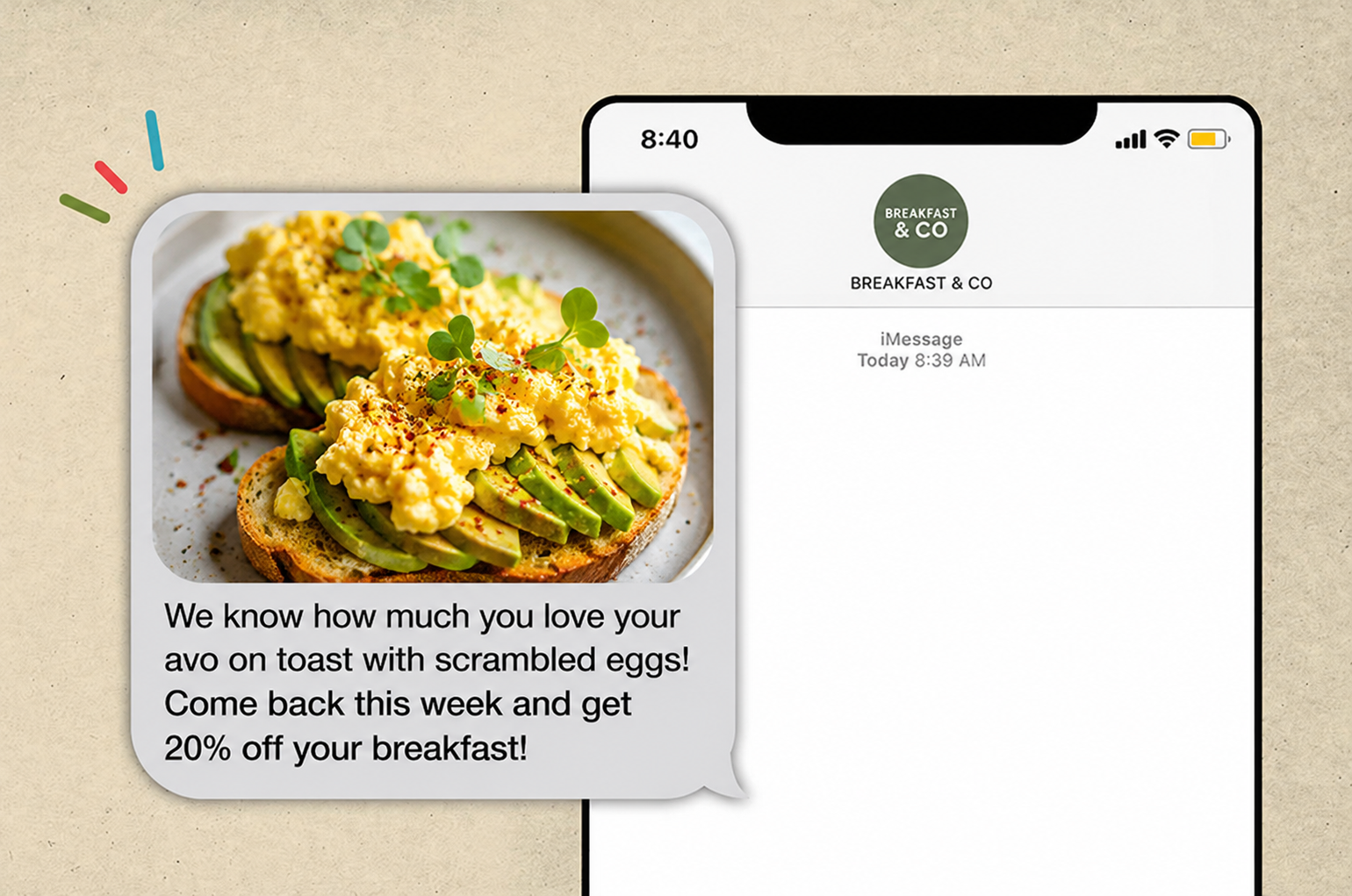
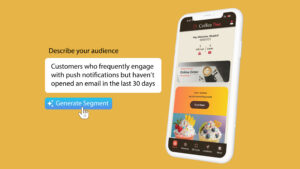
This is where Como plays a critical role. By connecting customer data, purchase behaviour and communication channels in one place, restaurants can automate these return triggers in a way that feels timely, relevant and personal rather than repetitive or generic.
Instead of relying on one-off campaigns, brands can create ongoing journeys that naturally bring customers back, whether through personalised offers, behaviour-based rewards or well-timed reminders that feel like a continuation of the last visit.
If a customer has no reason to think about you after leaving, you will not be remembered in absence.
3. Turn transactions into identity signals
People don’t stay loyal to food. They stay loyal to what it says about them. Significant restaurants become part of identity by:
- creating a recognisable “type” of customer experience
- making visits feel like a choice that reflects taste, not convenience
- building emotional language around the brand (comfort, reward, ritual, escape)
At this point, visiting becomes self-expression.
4. Reduce forgettability inside the experience itself
Most restaurants lose memory at the weakest moment of the experience. Forgettability happens when:
- everything feels interchangeable
- nothing stands out enough to retell
- the experience is pleasant but not structured for recall
Memory is not created during the visit. It is created in what the customer remembers after it. Small distinctions matter more than broad excellence. Build intentional memory hooks into the experience itself. Give people something slightly odd, specific, or emotionally tagged to latch onto like a signature ritual, a standout interaction or a moment of surprise that breaks the flow of “just another meal.” Basically, don’t let the experience be smooth and forgettable like 90% of hospitality.
5. Build repetition with meaning, not just frequency
Frequent customers are often just habitual ones. The difference is meaning:
- habitual visits can disappear instantly if convenience changes
- meaningful visits create resistance to replacement
Significance increases when each return feels like continuation, not repetition.
Restaurants become significant when customers would notice if they were gone. And that only happens when the experience stops being a transaction people complete and starts becoming something they mentally return to even when they’re not there.
In an industry defined by competition and convenience, being chosen is not enough. The more relevant question is whether your absence would be felt at all.